Banff National Park: Canada’s Turquoise Lakes and Snowy Peaks
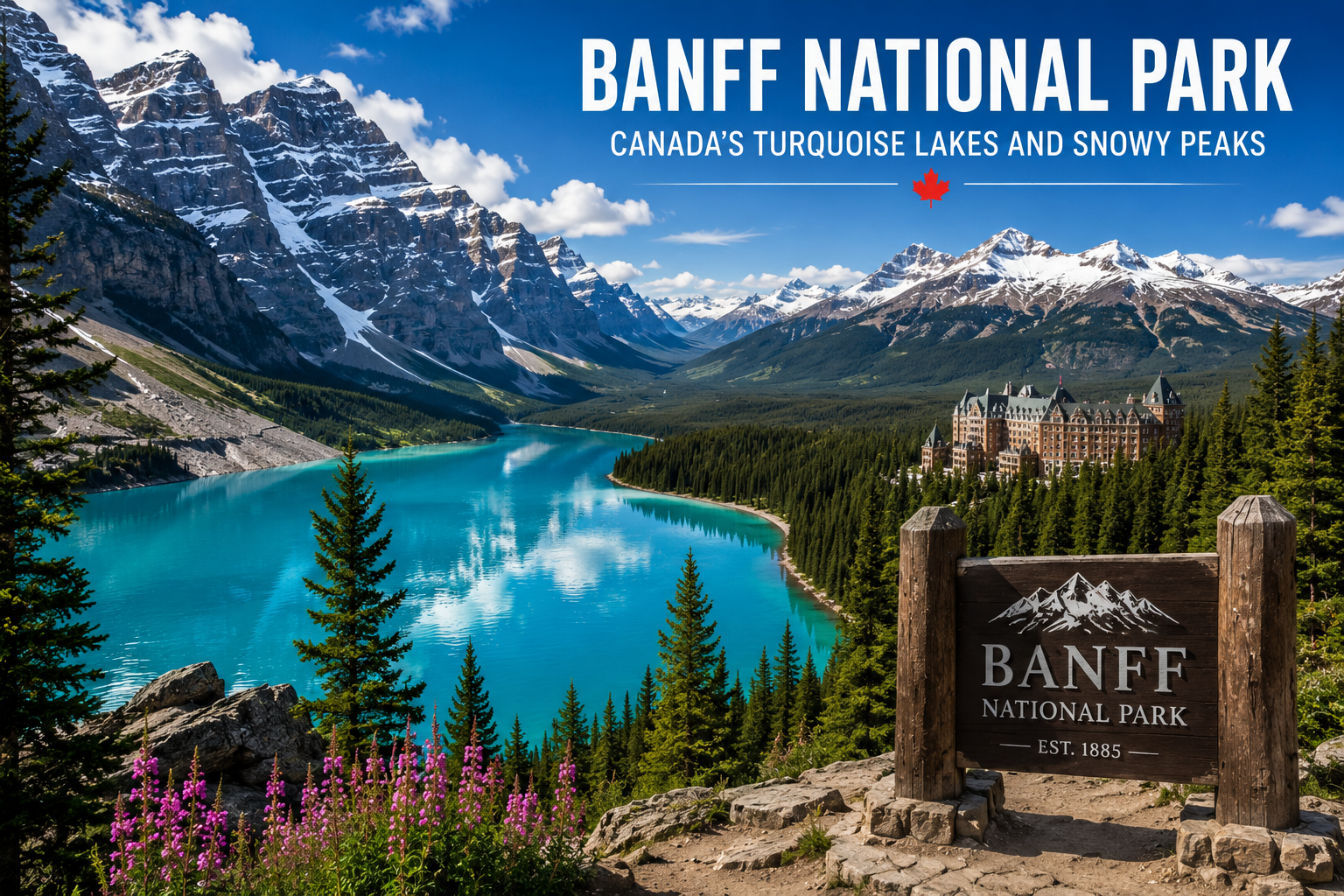
Banff National Park is one of Canada’s most breathtaking natural destinations. Located in the heart of the Canadian Rockies, it attracts travelers with turquoise lakes, snow-covered mountain peaks, ancient forests, powerful waterfalls, and remarkable wildlife. Every season transforms the landscape, offering new experiences for hikers, photographers, families, and adventure lovers.
Established in 1885, Banff National Park became Canada’s first national park and remains one of the country’s most celebrated protected areas. Its dramatic scenery reflects the power of glaciers, rivers, forests, and mountains. Moreover, the park offers visitors a chance to experience nature while exploring scenic roads, peaceful trails, and mountain towns.
Although many travelers visit during summer, Banff remains beautiful throughout the year. Summer brings clear hiking trails and bright blue lakes, while winter covers the mountains and valleys with snow. Therefore, visitors can choose a season based on their preferred activities and travel style.
From the famous waters of Lake Louise to the rugged views along the Icefields Parkway, Banff offers a memorable journey through one of North America’s most impressive mountain landscapes.
Banff National Park and Its Turquoise Lakes
The turquoise lakes are among the most famous attractions in Banff National Park. Glacial water carries tiny particles of rock known as rock flour. These particles reflect sunlight and give many lakes their bright blue and green colors.
Lake Louise is one of the park’s best-known destinations. High mountain peaks and glaciers surround the lake, creating a spectacular setting. During summer, visitors can walk along the shoreline, hike nearby trails, or enjoy views from the surrounding area.
Moraine Lake also attracts travelers with its intense turquoise water and dramatic mountain backdrop. The Valley of the Ten Peaks rises behind the lake and creates one of Canada’s most recognizable natural views.
Furthermore, the lakes change throughout the year. During warmer months, sunlight highlights their bright colors. In winter, ice and snow create a quieter landscape. Therefore, every season provides a different perspective.
Snowy Peaks and the Canadian Rockies
The Canadian Rockies define the landscape of Banff. Sharp peaks rise above forests, valleys, rivers, and glacial lakes. Their impressive scale creates a dramatic setting for outdoor exploration.
Many mountain viewpoints are accessible by road or short walking paths. However, longer hiking routes allow experienced visitors to explore higher areas and enjoy wide views.
The mountains also support glaciers and snowfields. These frozen landscapes help feed rivers and lakes throughout the region. As a result, the mountains play an important role in the park’s ecosystem.
During winter, snow covers many peaks and creates excellent conditions for skiing and other seasonal activities. Meanwhile, summer allows visitors to explore mountain trails and alpine meadows.
Scenic Drives Through Mountain Landscapes
The Icefields Parkway is one of the most scenic roads in Canada. It connects Banff with Jasper National Park and passes through forests, mountain valleys, glaciers, waterfalls, and open viewpoints.
Travelers can stop at several scenic locations along the route. For example, Peyto Lake offers a striking view of bright turquoise water surrounded by mountains. The lake’s unique shape makes it a popular photography destination.
The route also leads toward the Columbia Icefield, one of the largest icefields in the Rocky Mountains. Visitors can view glaciers and learn about the region’s natural history.
However, mountain weather can change quickly. Therefore, drivers should check road conditions, carry essential supplies, and allow extra time for stops.
Hiking Trails for Every Experience Level
Banff offers hiking opportunities for beginners and experienced adventurers. Short trails provide easy access to lakes, forests, and scenic viewpoints. Meanwhile, longer routes lead into alpine landscapes.
The Lake Agnes Trail is a popular hike near Lake Louise. It takes visitors through forested areas and leads to a mountain lake. Along the way, hikers can enjoy views of the surrounding peaks.
Other trails offer waterfalls, open valleys, and high mountain viewpoints. However, visitors should choose routes that match their fitness and experience.
Before starting a hike, travelers should check weather forecasts and trail conditions. They should also carry water, food, suitable clothing, and navigation tools. In addition, hikers should remain on marked trails and respect wildlife habitats.
Wildlife and Natural Ecosystems
Banff supports a diverse range of wildlife. Visitors may see elk, deer, mountain goats, bighorn sheep, and many bird species. The park also provides habitat for larger animals, including bears and wolves.
Wildlife sightings can be exciting; however, visitors should observe animals from a safe distance. They should never feed wildlife or approach animals for photographs.
Moreover, forests, wetlands, rivers, and mountain areas support different ecosystems. Each habitat plays an important role in maintaining the region’s natural balance.
Responsible visitors can help protect these environments by following park rules, staying on trails, and carrying out all waste.
Winter Adventures and Snow Activities
Winter transforms Banff into a snowy mountain destination. The region offers skiing, snowboarding, ice skating, snowshoeing, and other outdoor activities.
Several ski areas provide slopes for different skill levels. In addition, frozen lakes and snow-covered forests create peaceful scenery for winter walks.
Visitors should prepare for cold temperatures and changing weather. Warm layers, suitable footwear, and proper equipment can make outdoor activities safer and more comfortable.
Although winter days are shorter, the snowy landscapes provide unique photography opportunities. Consequently, travelers who enjoy winter sports and mountain scenery may find this season especially rewarding.
The Town of Banff and Local Experiences
The town of Banff provides restaurants, cafés, shops, accommodations, and cultural attractions. It also serves as a convenient base for exploring nearby lakes, trails, and scenic roads.
Visitors can enjoy mountain views while walking through the town. Local businesses offer outdoor equipment, guided activities, and regional products.
Furthermore, the town contains museums and cultural spaces that help travelers learn about the history and natural environment of the Canadian Rockies.
After a day of hiking or sightseeing, visitors can relax at local restaurants or explore the town’s welcoming streets.
Best Time to Visit Banff National Park
The best time to visit depends on the experiences travelers want. Summer generally provides easier access to hiking trails, lakes, and scenic roads. However, popular locations may become crowded.
Autumn brings cooler temperatures and changing colors. In addition, some areas become quieter after the busy summer season.
Winter offers snow sports and peaceful mountain scenery. Meanwhile, spring brings changing conditions as snow begins to melt and rivers become more active.
Because weather can vary, travelers should check current forecasts and local information before planning outdoor activities.
Why Banff National Park Should Be on Your Travel List
Banff National Park combines turquoise lakes, snowy peaks, forests, glaciers, wildlife, and outdoor adventure in one remarkable destination. Visitors can enjoy scenic drives, peaceful walks, mountain hikes, and unforgettable viewpoints.
Moreover, the park offers experiences throughout the year. Summer provides bright lakes and open trails, while winter creates a landscape of snow and ice.
Whether you enjoy photography, hiking, wildlife, road trips, or winter sports, Banff offers something memorable. However, visitors should travel responsibly and help protect its natural ecosystems.
Ultimately, Banff National Park represents the beauty and scale of the Canadian Rockies. Its turquoise waters, dramatic mountains, and protected wilderness create an experience that remains with travelers long after they leave.