
Indonesia’s Komodo Island: Dragons, Pink Beaches, and Untamed Wilderness
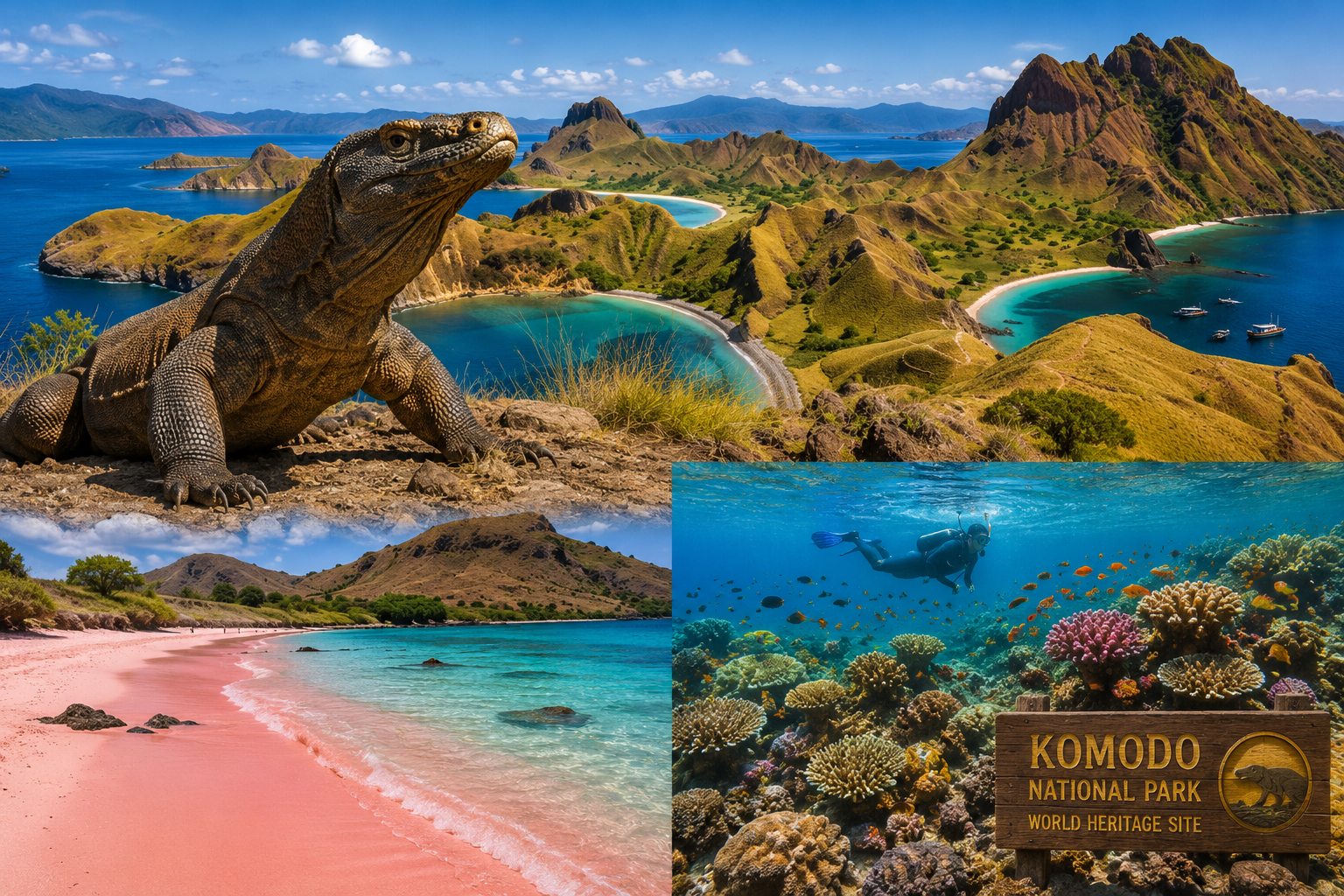
Indonesia’s Komodo Island is one of the most extraordinary travel destinations in Southeast Asia. Known for its ancient Komodo dragons, rare pink beaches, rugged hills, and wild coastal landscapes, the island offers an adventure unlike any other. Located within Komodo National Park, this remarkable destination attracts wildlife lovers, photographers, hikers, divers, and travelers seeking a close connection with nature.
Although many visitors come to see the world-famous Komodo dragon, the island offers much more than its legendary reptiles. Turquoise waters surround dramatic coastlines, while dry savannas cover rolling hills. In addition, colorful coral reefs support a rich variety of marine life. As a result, Indonesia’s Komodo Island provides unforgettable experiences both on land and beneath the sea.
The island’s remote setting also creates a powerful feeling of untamed wilderness. Visitors can explore protected landscapes, hike to scenic viewpoints, relax on unusual beaches, and observe wildlife in its natural environment. Therefore, Komodo Island deserves a place on the travel list of anyone who enjoys nature and adventure.
Indonesia’s Komodo Island and the Legendary Komodo Dragons
The Komodo dragon is the main attraction of Indonesia’s Komodo Island. These enormous reptiles are the largest living lizards in the world. Some adults grow to impressive lengths and possess powerful bodies, sharp claws, strong tails, and excellent hunting abilities.
Komodo dragons live in dry grasslands, open savannas, forests, and coastal areas. They may move slowly at times; however, they can react quickly when hunting or defending themselves. Their ancient appearance gives visitors the feeling of stepping into a prehistoric world.
Park rangers guide visitors through designated areas where they can observe the dragons from a safe distance. Rangers understand the animals’ behavior and help protect both visitors and wildlife. Therefore, travelers should always follow their instructions and avoid approaching or disturbing the animals.
Moreover, the dragons play an important role in the island’s ecosystem. They help maintain the natural balance by acting as major predators. Seeing these remarkable creatures in their protected habitat makes a visit to Komodo Island truly memorable.
The Famous Pink Beaches of Komodo
Komodo Island is also famous for its rare pink beaches. The soft pink color comes from tiny red organisms called foraminifera. These microscopic organisms produce red pigments that mix with white sand and create a beautiful pink appearance.
The color can look different throughout the day. For example, bright sunlight may make the beach appear light pink, while softer evening light can create warmer shades. In addition, the clear blue water creates a striking contrast with the colorful shoreline.
Visitors can walk along the beach, enjoy the scenery, take photographs, or explore the shallow water. However, travelers should avoid removing sand, coral, or marine life. Protecting these natural features helps preserve the beach for future visitors.
Pink Beach offers more than beautiful scenery. The nearby waters also contain colorful fish and coral formations. Consequently, snorkeling provides another exciting way to experience the area’s natural beauty.
Hiking Through Rugged Island Wilderness
The rugged landscape gives Komodo Island a strong sense of adventure. Dry hills, grassy plains, rocky paths, and coastal viewpoints create excellent opportunities for hiking and exploration.
Several guided routes allow visitors to experience the island’s scenery while learning about local wildlife. During a hike, travelers may see birds, deer, wild boar, and other animals. Meanwhile, the surrounding hills provide wide views of the ocean and nearby islands.
The landscape changes with the seasons. During the dry season, golden grass often covers the hills. In contrast, the rainy season brings greener vegetation and a more vibrant appearance.
Because the weather can become hot, visitors should carry drinking water, wear suitable footwear, and use sun protection. Additionally, travelers should remain on approved trails and follow guidance from park staff.
Exploring Marine Life and Coral Reefs
The waters surrounding Komodo Island contain some of the region’s most diverse marine ecosystems. Coral reefs support colorful fish, sea turtles, rays, and many other marine species.
Snorkeling and diving allow visitors to explore these underwater environments. Clear water often provides excellent visibility, while strong currents can create exciting conditions for experienced divers.
However, ocean conditions can change quickly. Therefore, travelers should choose responsible tour operators and follow local safety instructions. Beginners should also select sites that match their experience level.
Furthermore, visitors can protect marine ecosystems by avoiding contact with coral. Even small actions can damage fragile reef structures. Responsible travel helps preserve these underwater habitats and supports long-term conservation.
Local Communities and Island Culture
Komodo Island has a rich cultural identity as well as remarkable natural beauty. Local communities have developed traditions that connect closely with the sea, wildlife, and surrounding environment.
Fishing has played an important role in the lives of many residents. Traditional boats and coastal villages reflect the region’s strong relationship with the ocean. Visitors may learn about local customs, enjoy regional food, and purchase handmade products.
Moreover, supporting local guides, family-run businesses, and community-based tourism can benefit residents directly. Travelers should respect local customs and ask permission before photographing people or private spaces.
Cultural experiences add depth to a visit because they help travelers understand the human history connected to the island.
Best Time to Visit Komodo Island
The best time to visit Komodo Island depends on the activities travelers prefer. The dry season generally provides sunny weather and comfortable conditions for hiking, island tours, and outdoor exploration.
During this period, the hills may appear golden and dry. Therefore, photographers often enjoy the dramatic contrast between the landscape and the blue ocean.
The wetter months bring greener scenery and changing weather conditions. Although rain may affect some activities, the landscape can look especially vibrant.
Before traveling, visitors should check current weather conditions, park updates, and tour availability. Seasonal changes can affect boat routes, hiking conditions, and wildlife activity.
Responsible Travel and Wildlife Protection
Komodo Island contains fragile ecosystems that require careful protection. Visitors should follow park rules, stay on marked paths, and avoid disturbing wildlife.
Travelers should never feed, touch, or approach Komodo dragons. Instead, they should observe the animals quietly from a safe distance under the guidance of trained rangers.
In addition, visitors should carry reusable water bottles and avoid leaving waste behind. They should also protect coral reefs by not stepping on them or collecting marine life.
Choosing responsible tour companies can support conservation efforts and local communities. As a result, travelers can enjoy the island while helping preserve its unique environment.
Why Komodo Island Should Be on Your Travel List
Komodo Island combines wildlife, adventure, scenic beaches, mountain views, and marine beauty in one unforgettable destination. Visitors can observe legendary Komodo dragons, walk along pink shores, hike through rugged landscapes, and explore colorful underwater ecosystems.
Moreover, the island offers a rare sense of wilderness. Its protected landscapes allow travelers to experience nature in a powerful and authentic way.
Whether you enjoy wildlife photography, hiking, snorkeling, diving, or scenic travel, Komodo Island offers a wide range of experiences. However, responsible tourism remains essential because the island’s ecosystems are valuable and sensitive.
Ultimately, Indonesia’s Komodo Island is much more than the home of the Komodo dragon. It is a remarkable natural destination where ancient wildlife, colorful beaches, dramatic landscapes, and rich marine ecosystems exist together. For travelers seeking adventure and natural beauty, Komodo Island offers a journey that remains memorable long after the visit ends.