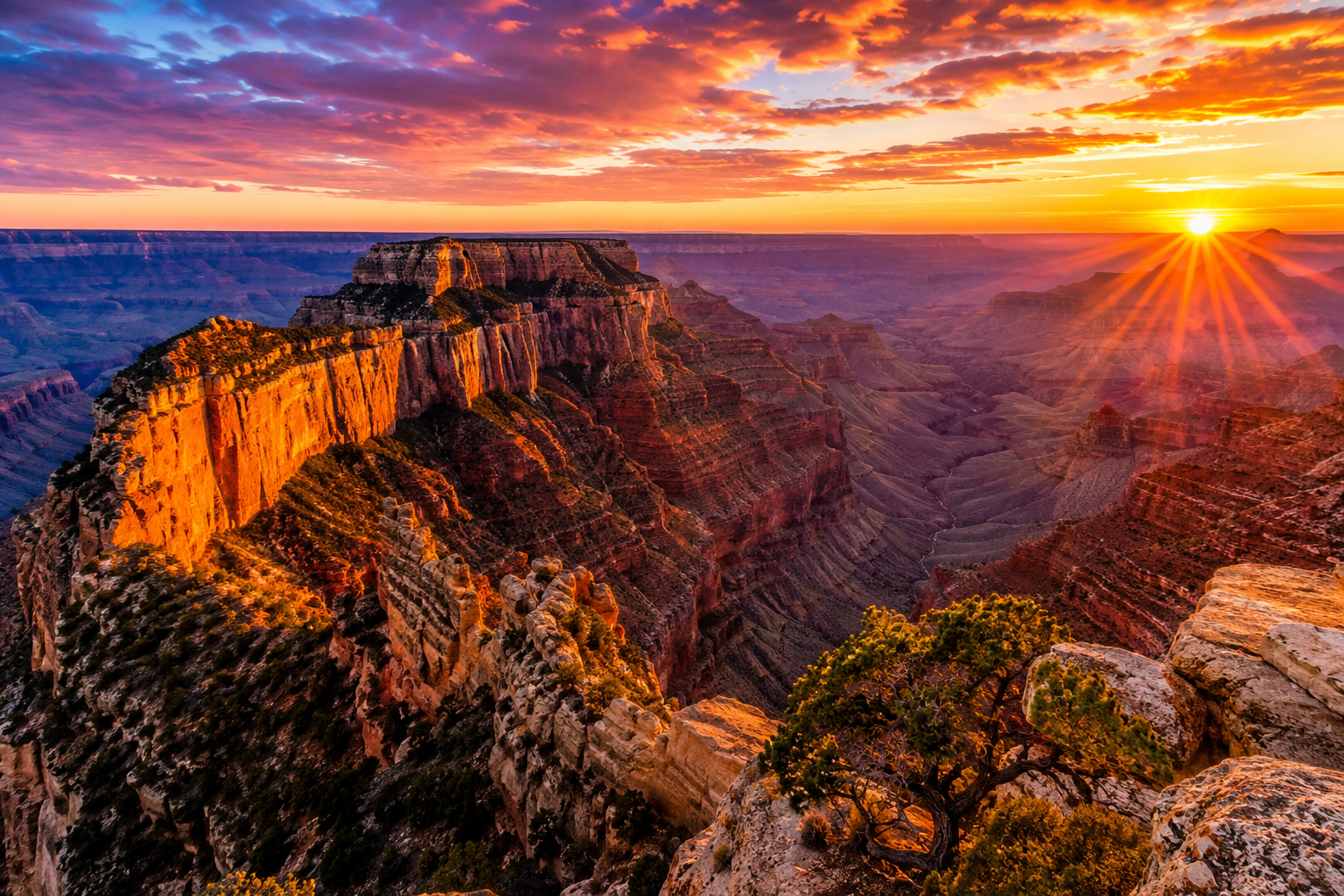
Grand Canyon Sunrise: America’s Most Iconic Natural Wonder Explored
A Grand Canyon Sunrise is one of the most unforgettable natural experiences in the United States. As the first rays of sunlight reach the canyon walls, the landscape changes from deep blue and purple shadows to glowing shades of gold, orange, red, and pink. The enormous rock formations slowly become visible, revealing millions of years of geological history.
Located in northern Arizona, the Grand Canyon attracts travelers from around the world. However, sunrise offers a quieter and more peaceful way to experience this famous landmark. During the early morning, cooler temperatures, softer light, and fewer visitors create ideal conditions for sightseeing and photography.
The canyon stretches for hundreds of miles, while the Colorado River flows through its vast landscape. Over millions of years, the river helped shape the deep valleys and colorful rock layers that visitors see today. Therefore, watching the sun rise over this remarkable landscape provides more than a beautiful view. It also offers a powerful connection to nature and time.
Grand Canyon Sunrise: A Spectacular Natural Experience
A Grand Canyon Sunrise begins before the sun appears above the horizon. At first, the canyon often looks dark and quiet. Then, soft shades of blue and purple spread across the cliffs and valleys.
As daylight increases, sunlight reaches the upper rock formations. Consequently, the canyon begins to display warm shades of red, orange, gold, and pink. The changing light creates new patterns across the landscape every few minutes.
Moreover, the canyon’s size makes the sunrise feel especially dramatic. Sunlight reaches different areas at different times, while deep shadows remain inside the lower valleys. This contrast gives the landscape depth and creates excellent opportunities for photography.
Because the experience changes quickly, visitors should arrive before sunrise. They can then watch the entire transformation from darkness to daylight.
The Geology Behind the Canyon’s Colorful Landscape
The Grand Canyon is not only beautiful; it also provides an extraordinary record of Earth’s geological history. Its exposed rock layers show how the region changed over millions of years.
Different minerals create the canyon’s famous colors. Iron-rich rocks often produce red and orange shades, while other minerals create lighter colors. As sunlight moves across the landscape, these colors appear to change.
Furthermore, the Colorado River helped carve the canyon over a long period. Water carried sediment through the region and gradually cut deeper into the land. Wind, rain, and changing temperatures also shaped the cliffs and valleys.
As a result, the canyon became one of the largest and most recognizable natural landscapes in the world.
Best Viewpoints for Sunrise
The South Rim provides several excellent locations for watching sunrise. Mather Point is one of the most popular viewpoints because it offers wide views and easy access.
However, popular viewpoints can become crowded during busy travel seasons. Therefore, visitors should arrive early and choose a safe viewing location.
Yaki Point provides another beautiful perspective. It offers broad views of the canyon and can feel quieter than some central locations. Meanwhile, Desert View provides a different angle and allows visitors to see distant sections of the canyon.
Each viewpoint creates a unique sunrise experience. Some locations highlight deep valleys, while others provide wide views of the canyon walls. Consequently, travelers may want to explore several viewpoints during their visit.
Planning Your Early-Morning Visit
A successful sunrise visit requires some preparation. First, travelers should check the official sunrise time before leaving their accommodation. Arriving at least thirty to forty-five minutes early allows enough time to find a viewing spot.
Temperatures can feel cold before sunrise, even during warmer months. Therefore, visitors should wear layers and bring a warm jacket. Comfortable walking shoes are also useful because some viewpoints require short walks.
In addition, travelers should carry water and a small flashlight. They should avoid walking near cliff edges in low light and remain on marked paths.
Photography enthusiasts may want to bring a tripod. However, visitors should also spend time enjoying the view without looking through a camera.
Photography Tips for a Grand Canyon Sunrise
A Grand Canyon Sunrise offers changing light and dramatic colors. Therefore, photographers should arrive early and prepare their equipment before the sky begins to brighten.
Wide-angle photographs can capture the scale of the canyon. However, longer lenses can highlight distant cliffs and layers. Photographers can also include trees, rocks, or viewing platforms in the foreground to create depth.
Moreover, the best photographs may appear before or after the sun reaches the horizon. During these periods, soft light can create rich colors without harsh shadows.
Visitors should avoid standing in unsafe locations to capture an image. Instead, they should use established viewpoints and follow park rules.
Hiking and Exploring After Sunrise
After sunrise, visitors can continue exploring the canyon. The cooler morning temperatures often make this a comfortable time for walking.
The Rim Trail offers scenic views and provides access to several viewpoints. Travelers can choose short walks or longer sections depending on their available time.
More experienced hikers may explore trails that descend below the rim. However, these routes require careful planning because hiking back uphill can be difficult.
Therefore, hikers should carry enough water, wear suitable footwear, and check trail conditions. They should also understand their limits and allow enough time to return safely.
Wildlife and Nature Around the Canyon
The Grand Canyon supports a wide range of plants and animals. Visitors may see birds flying above the cliffs or small animals near the trails.
Different elevations create different habitats. As a result, vegetation can change significantly between the rim and the canyon floor.
Travelers should observe wildlife from a respectful distance. They should never feed animals because human food can harm wildlife and change natural behavior.
Furthermore, visitors should protect the environment by staying on trails and carrying out all waste.
Best Time to Experience Sunrise
Sunrise offers beautiful views throughout the year. However, each season creates a different atmosphere.
Spring often provides comfortable temperatures and fresh landscapes. Summer offers longer days but can bring larger crowds and warmer conditions later in the day.
Autumn may provide pleasant weather and clearer views. Meanwhile, winter can create a quieter experience and may add snow to the canyon’s upper areas.
Weather conditions can change quickly. Therefore, travelers should check forecasts and official park information before visiting.
Why the Grand Canyon Remains an Iconic Wonder
The Grand Canyon represents the power of nature and the passage of time. Its vast scale, colorful rock layers, and deep valleys continue to inspire visitors.
A sunrise experience makes the landscape feel even more remarkable. As light moves across the canyon, familiar rock formations appear new and different.
Moreover, early morning provides a peaceful atmosphere before the busiest hours begin. Visitors can listen to the wind, observe the changing colors, and appreciate the enormous scale of the landscape.
Ultimately, a Grand Canyon Sunrise is more than a beautiful travel experience. It combines natural history, dramatic scenery, peaceful moments, and unforgettable views. Whether you enjoy photography, hiking, geology, or nature, watching the first light spread across America’s most iconic natural wonder creates a memory that can last a lifetime.