Georgia’s Tbilisi: Where Europe Meets Asia in the Caucasus
Georgia’s Tbilisi is a fascinating capital city where European elegance, Asian influences, ancient traditions, and modern creativity come together. Located in the heart of the Caucasus region, Tbilisi has long served as a meeting point between East and West. Its historic streets, colorful balconies, centuries-old churches, lively markets, traditional bathhouses, and modern architecture make it one of the most distinctive destinations in Europe and Asia.
Built along the banks of the Mtkvari River and surrounded by hills, Georgia’s Tbilisi offers a unique blend of old-world charm and contemporary energy. Visitors can walk through narrow cobblestone streets, discover historic landmarks, enjoy local cuisine, and experience the warm hospitality for which Georgia is known.
Whether you are interested in history, architecture, food, culture, or scenic views, Tbilisi provides an unforgettable travel experience.
A City Shaped by Europe and Asia
The location of Georgia’s Tbilisi has played an important role in shaping its identity. The city lies near the crossroads of Europe and Asia and has been influenced by many cultures throughout its history. Persian, Ottoman, Russian, Byzantine, and Caucasian traditions have all contributed to its architecture, food, language, and way of life.
As a result, Tbilisi does not feel completely European or entirely Asian. Instead, it has developed a character of its own. Historic churches stand near traditional bathhouses, while modern buildings appear alongside old wooden homes.
This mixture of influences makes the city especially interesting for travelers. Every neighborhood tells a different story, and even a short walk can reveal changing architectural styles and cultural traditions.
Exploring
Georgia’s Tbilisi
Old Town
The Old Town is one of the most attractive areas of Georgia’s Tbilisi. Its narrow streets, colorful houses, wooden balconies, and historic buildings create a welcoming atmosphere. Many of the city’s important landmarks are located within walking distance of one another.
Visitors can explore small cafés, local shops, art galleries, and traditional restaurants while walking through the historic lanes. The area is especially beautiful in the evening when lights illuminate the streets and buildings.
The Old Town also reflects the city’s multicultural past. Different religious and cultural communities have lived in Tbilisi for centuries, and their influence can still be seen in the city’s landmarks and neighborhoods.
Narikala Fortress and Panoramic Views
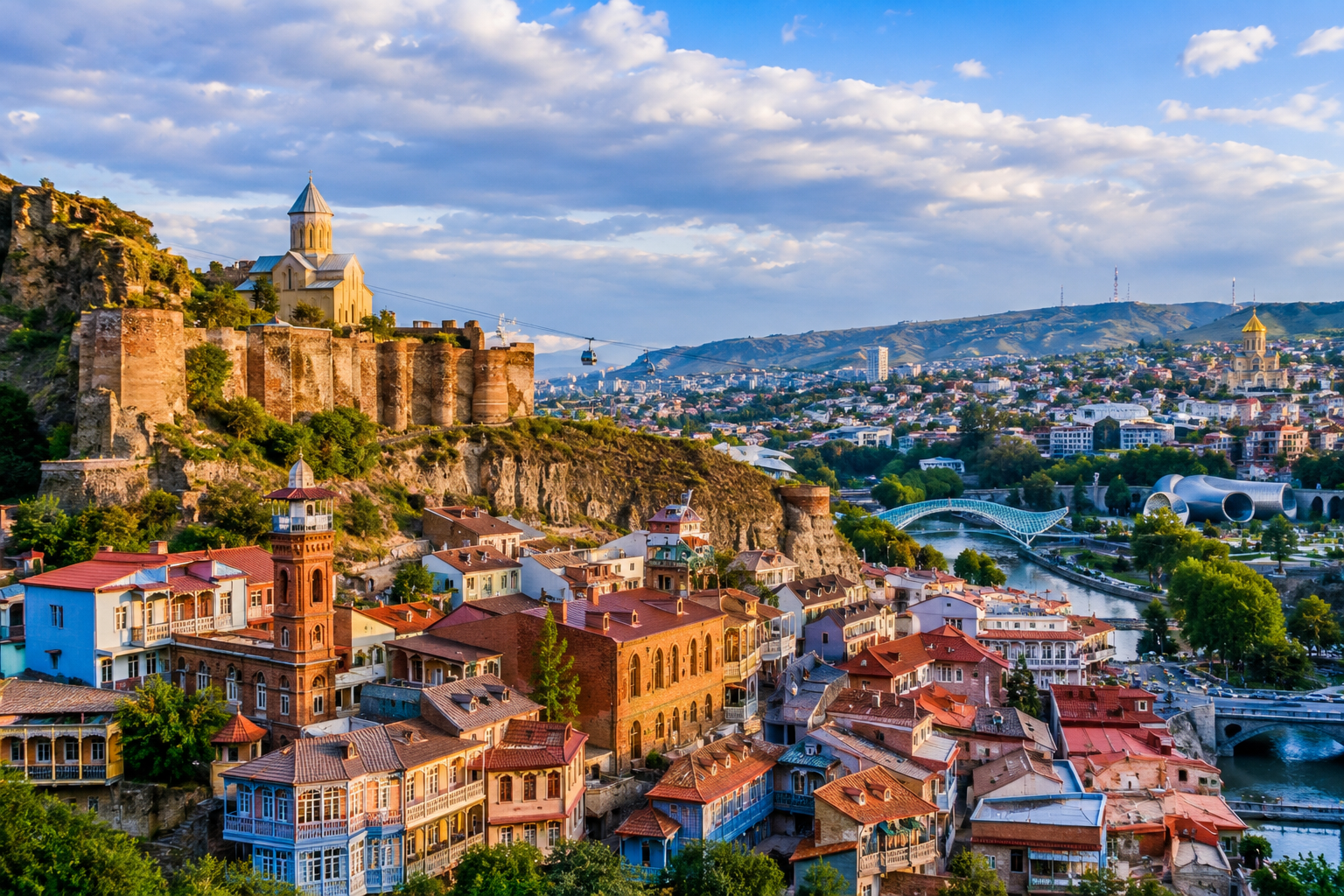
Narikala Fortress is one of the most recognizable landmarks in Georgia’s Tbilisi. Located on a hill above the Old Town, the fortress provides impressive views of the city, the Mtkvari River, and the surrounding mountains.
Visitors can reach the area by walking uphill or taking a cable car. The journey itself offers beautiful views of the historic center. From the top, travelers can see the contrast between traditional neighborhoods and modern parts of the city.
The fortress has witnessed many important periods in Tbilisi’s history. Although parts of it have been rebuilt and restored, it remains a powerful symbol of the city’s past.
The Famous Sulfur Baths Georgia’s Tbilisi
The traditional sulfur baths are one of the most unique attractions in Georgia’s Tbilisi. The city was built around natural hot springs, and these springs are closely connected to the origin of Tbilisi’s name.
The Abanotubani district is known for its distinctive domed bathhouses. Visitors can enjoy private or shared bathing experiences in warm mineral water. The baths are an important part of local culture and provide a relaxing way to experience a long-standing tradition.
The surrounding neighborhood is also known for its historic architecture and scenic atmosphere. It is a popular area for walking, photography, and exploring nearby landmarks.
Modern Architecture and Creative Spaces
Although Georgia’s Tbilisi is famous for its historic charm, the city also has a modern and creative side. Contemporary architecture, public art, stylish cafés, and cultural spaces add a new dimension to the city.
The Peace Bridge is one of the best-known modern landmarks. Its glass-and-steel design contrasts with the traditional buildings nearby. The bridge becomes especially attractive after sunset when it is illuminated.
The city also has growing communities of artists, designers, musicians, and entrepreneurs. Creative neighborhoods contain galleries, workshops, cafés, and cultural venues. These spaces show how Tbilisi continues to evolve while maintaining a strong connection to its history.
Georgian Food and Local Hospitality
Food is an important part of the experience in Georgia’s Tbilisi. Georgian cuisine is known for its rich flavors, fresh ingredients, herbs, breads, and traditional recipes.
Khachapuri, a warm bread filled with cheese, is one of the country’s most famous dishes. Khinkali, large dumplings filled with meat or vegetables, are another popular local specialty. Visitors can also enjoy grilled dishes, vegetable-based meals, soups, and traditional desserts.
Local hospitality is equally memorable. Sharing food is an important part of Georgian culture, and meals often bring people together for conversation and celebration. Travelers frequently find that restaurants and family-run businesses offer a warm and welcoming atmosphere.
Best Time to Visit Georgia’s Tbilisi
Spring and autumn are often considered excellent seasons for visiting Georgia’s Tbilisi. During spring, temperatures are comfortable, and the city becomes greener. Autumn brings pleasant weather and colorful scenery in the surrounding region.
Summer can be warm, but it is a lively time for outdoor cafés, cultural events, and evening walks. Winter is cooler and may offer a quieter experience, especially for travelers who prefer fewer crowds.
The city can be explored throughout the year, but visitors should check local weather conditions before planning outdoor activities.
Travel Tips for First-Time Visitors
Georgia’s Tbilisi is easy to explore on foot, particularly in the Old Town. However, some streets are steep or uneven, so comfortable walking shoes are useful.
Visitors should carry water during warmer months and keep a map or navigation app available when exploring unfamiliar neighborhoods. Learning a few basic Georgian greetings can also make interactions with local people more enjoyable.
Travelers should respect religious sites, local customs, and historic buildings. Supporting local restaurants, shops, and small businesses can help create a more meaningful travel experience.
Why Georgia’s Tbilisi Should Be on Your Travel List
Georgia’s Tbilisi is a destination where history and modern life exist side by side. Its ancient fortresses, colorful streets, sulfur baths, modern bridges, traditional food, and mountain views create an experience unlike that of most capital cities.
The city’s location between Europe and Asia gives it a unique cultural identity. Visitors can experience different architectural styles, traditions, and flavors while exploring a compact and welcoming city.
Ultimately, Georgia’s Tbilisi is more than a place to visit. It is a city to explore slowly, experience through its food and culture, and remember through its stories. For travelers seeking history, authentic traditions, beautiful scenery, and a distinctive atmosphere, Tbilisi is a remarkable destination in the Caucasus.