Photography Tips and Travel Guide to High-Altitude Bog Lakes
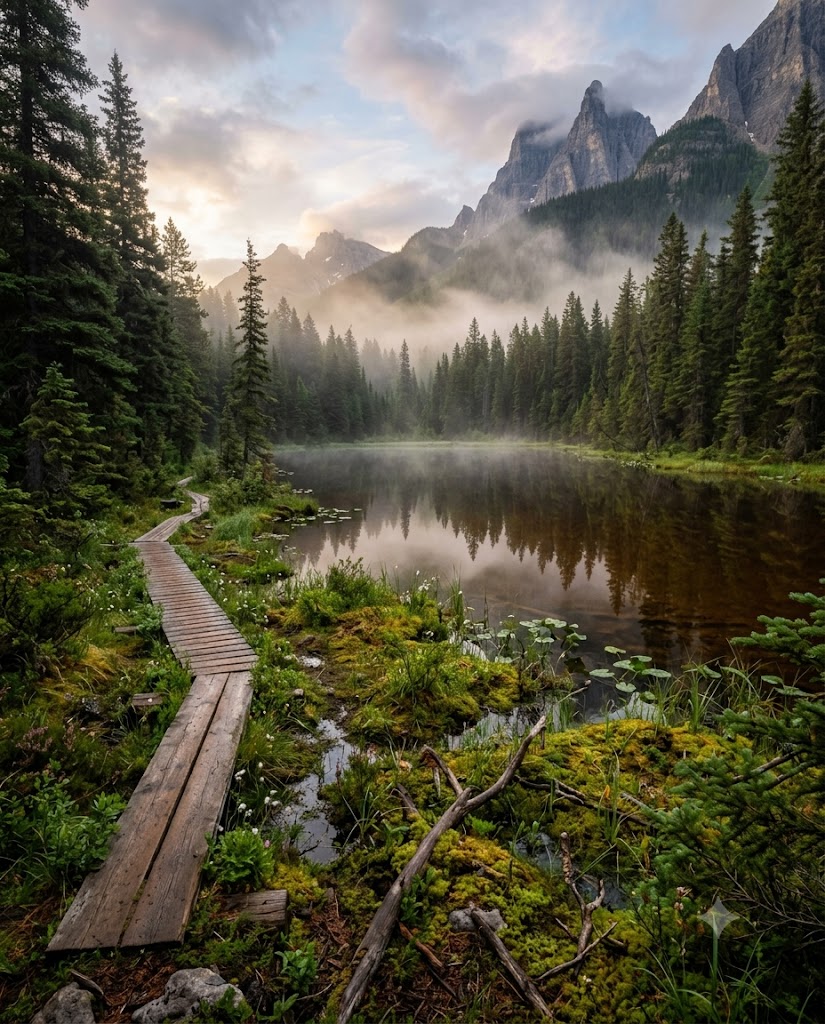
High-altitude bog lakes are some of the most mysterious landscapes you can find in mountain regions. Surrounded by pine and spruce forests, covered in morning mist, and filled with dark, tannin-rich water, these wetlands have an atmosphere that feels almost otherworldly.
Unlike traditional mountain photography, where bright blue lakes and dramatic peaks often steal the attention, bog photography is all about mood, texture, light, and atmosphere. With the right timing, equipment, and approach, you can capture photographs that feel like scenes from another world.
Whether you are a photographer, hiker, or nature lover, exploring a mountain bog can be an unforgettable experience.
Capture the Magic of Golden Hour
Lighting can completely transform a high-altitude bog lake. During the middle of the day, strong sunlight can create harsh shadows and bright reflections on the water. These conditions often make it difficult to capture the mysterious character of the landscape.
Early morning is usually a much better time to photograph these environments.
Arrive before sunrise if possible. During blue hour, the landscape takes on soft, cool tones. As the sun begins to rise, its gentle light can illuminate the trees and create beautiful contrasts between the dark water and surrounding vegetation.
Morning fog is another major advantage.
When cool mountain air meets the relatively warmer wetland surface, mist can form above the water. As the fog moves between the trees, it creates layers within the landscape. If sunlight breaks through the forest canopy, you may even capture beautiful rays of light passing through the mist.
For photographers, these moments are often worth waking up early for.
Use a Circular Polarizer Filter
Water is one of the most challenging elements to photograph in a bog landscape because its surface can produce strong reflections. A circular polarizer filter, or CPL, can give you much greater control.
By rotating the filter, you can reduce reflections on the surface of the lake. This can help reveal underwater details such as peat, moss, stones, and vegetation.
However, reflections can also be beautiful.
Instead of removing them completely, experiment with different angles. You might want a dark, mirror-like reflection of the surrounding pine trees. In another photograph, you may prefer to show the amber and brown tones beneath the surface.
A CPL allows you to decide how much of each element appears in the final photograph.
Remember that polarizers work best when you are shooting at an angle to the light source. Take a few test shots and rotate the filter slowly until you find the most interesting balance between reflections and underwater detail.
Look for Foreground Textures
One of the easiest ways to make a bog photograph more interesting is to move closer to the ground.
Instead of photographing only the lake and distant forest, search for small details around the edge of the wetland. Bright green sphagnum moss, cotton grass, peat formations, fallen branches, and other plants can provide excellent foreground interest.
Try placing these elements in the lower part of your frame.
The viewer’s eye will naturally move from the foreground toward the water and then into the forest beyond. This creates a sense of depth and makes the photograph feel more immersive.
A wide-angle lens can work particularly well for this technique. Get low, move close to an interesting plant or moss formation, and carefully compose the background behind it.
Photograph the Atmosphere, Not Just the Landscape
High-altitude bogs are not always about dramatic scenery. Their beauty often comes from subtle details.
Look for fog drifting between trees, reflections changing on the water, droplets sitting on moss, or sunlight touching a small section of vegetation.
You can also experiment with slower shutter speeds when conditions allow. Moving fog or gentle water movement can create a soft, dreamlike appearance.
On cloudy days, don’t immediately pack away your camera. Overcast conditions can actually be excellent for bog photography because the soft light reduces harsh highlights and preserves details in the vegetation.
The Mysterious Folklore of Forested Peatlands
Mountain bogs have fascinated people for centuries. Their combination of dark water, thick vegetation, isolated forests, and mysterious fog naturally created an environment where legends could develop.
Across northern Europe and other regions, peatlands were often associated with spirits, mysterious lights, and supernatural beings.
One of the best-known legends is the Will-o’-the-Wisp. Folklore described mysterious lights appearing above wetlands at night. Travelers sometimes believed these lights were spirits deliberately guiding people away from safe paths.
The scientific explanation is more complicated than the legend. Wetlands produce gases as organic matter decomposes, and under certain conditions these gases can contribute to unusual glowing or flickering phenomena. Historical explanations often linked the lights to gases such as methane and phosphine.
Whether explained by science or folklore, the stories add another layer of mystery to these landscapes.
Ancient Bog Bodies
Peatlands can also preserve traces of the past in remarkable ways.
The acidic, oxygen-poor conditions found in some bogs can slow decomposition. Archaeologists have discovered ancient human remains, commonly known as bog bodies, with surprisingly preserved skin, hair, and clothing.
These discoveries have provided valuable information about ancient societies, their lifestyles, diets, clothing, and rituals.
Bogs were not always viewed simply as difficult terrain. In some ancient European traditions, wetlands were considered sacred or mysterious places. Objects and offerings were sometimes deposited in them, possibly as part of religious or ritual practices.
This fascinating connection between archaeology, history, and folklore makes peatlands more than beautiful landscapes—they are also natural archives of the past.
Spirits of the Forest and Water
Stories about supernatural beings were also common in northern and eastern European cultures.
Slavic traditions included stories of the Leshy, a forest spirit associated with woodland areas. Nordic and European folklore also contained stories about water spirits and mysterious creatures living around lakes and wetlands.
Travelers were sometimes warned to behave respectfully in these environments and avoid disturbing the natural surroundings.
Today, these stories remain an interesting part of the cultural history surrounding bog landscapes. They also reflect how people historically tried to understand wild environments that could be difficult, dangerous, and unpredictable.
Essential Gear for a Bog Lake Trek
Exploring a high-altitude bog requires more preparation than a normal sightseeing trip. Wet ground, sudden weather changes, slippery vegetation, and hidden water can create challenging conditions.
Waterproof Hiking Boots
Choose waterproof hiking boots with good ankle support and deep traction. Regular running shoes can become wet very quickly when walking across saturated ground.
A waterproof membrane can help keep your feet dry, while a strong outsole provides better grip on muddy and slippery surfaces.
Gaiters
Gaiters are especially useful when walking through wet vegetation. They help prevent mud, water, and loose debris from entering your boots.
They are lightweight and can make a major difference during long hikes through damp terrain.
Trekking Poles
Never assume that grassy-looking ground is solid.
Some bog surfaces can consist of floating vegetation covering water or soft peat. Trekking poles can help you test the ground ahead before placing your full weight on it.
They also provide additional balance when crossing slippery areas.
Insect Protection
Wetlands are ideal habitats for mosquitoes, midges, and other insects.
Carry a reliable insect repellent and consider using a lightweight mesh headnet if you expect to spend several hours in dense vegetation.
Long sleeves and lightweight trousers can also provide additional protection.
Dry Bags
Your camera, phone, spare clothes, batteries, and other electronics should be protected from moisture.
A dry bag inside your backpack provides an extra layer of protection if you encounter heavy rain or accidentally step into deep water.
For photographers, this precaution is particularly important because a wet camera can quickly turn an amazing trip into an expensive problem.
Photograph Responsibly and Respect the Bog
Finally, remember that peatlands are fragile ecosystems.
Avoid trampling moss, damaging vegetation, or walking across areas that are clearly unstable. Stay on established paths whenever they are available and follow local regulations.Most beautiful mountain lakes
Take only photographs and leave natural objects where you find them.Most beautiful mountain lakes
The best bog photograph is not simply one that looks beautiful. It is onMost beautiful mountain lakese that captures the atmosphere of the place while leaving the landscape exactly as you found it.
Final Thoughts
High-altitude bog lakes offer photographers something different from conventional mountain landscapes. Their beauty lies in dark reflections, delicate vegetation, drifting fog, ancient forests, and changing mountain light.Most beautiful mountain lakesMost beautiful mountain lakes
Visit during the early morning, experiment with a polarizing filter, get close to foreground textures, and don’t be afraid of cloudy or misty conditions.Most beautiful mountain lakes
Most importantly, slow down.
Listen to the forest, watch the fog move across the water, and look carefully at the small details around you. A high-altitude bog may not reveal its beauty immediately—but when the light, weather, and landscape come together, it can produce some of the most atmospheric photographs you’ll ever capture.