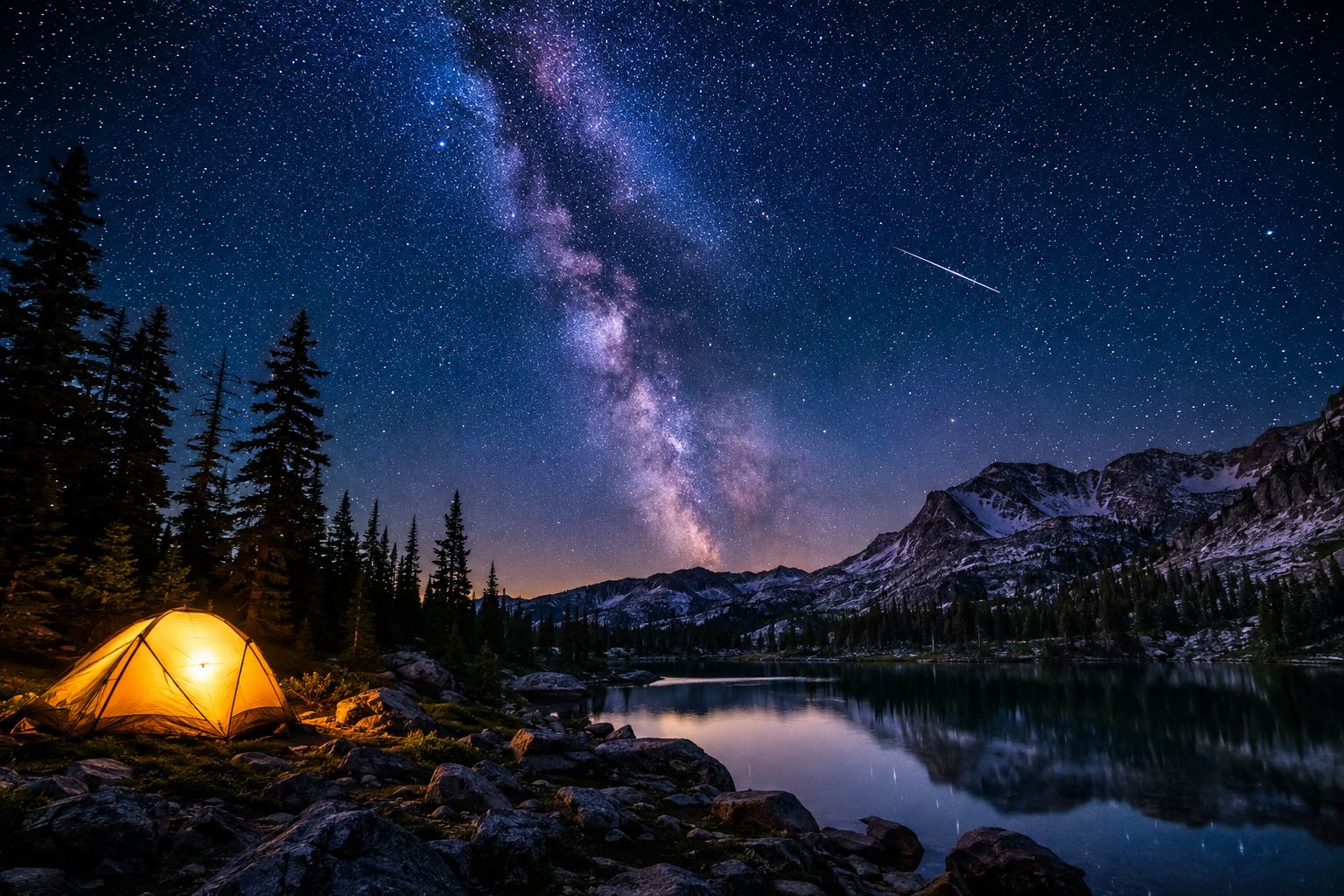
Looking up at a clear night sky can be one of the most peaceful and unforgettable travel experiences. Far away from crowded cities and artificial lights, the night sky reveals thousands of stars, bright planets, meteor showers, and sometimes even the glowing Milky Way. For travelers who love astronomy and nature, visiting the best stargazing destinations can turn an ordinary vacation into a magical adventure.
Light pollution has made it increasingly difficult to see stars from major cities. Fortunately, there are remote deserts, mountains, islands, national parks, and protected areas where exceptionally dark skies create perfect conditions for stargazing. Here are some of the world’s most spectacular destinations for experiencing the night sky.
1. Atacama Desert, Chile
The Atacama Desert is widely regarded as one of the world’s premier locations for astronomy. Located in northern Chile, this incredibly dry desert has high elevation, minimal cloud cover, and very little artificial light.
The town of San Pedro de Atacama is a popular base for travelers interested in astronomy. Several observatories and astronomy tours allow visitors to explore the night sky with professional telescopes.
On a clear night, the Milky Way can appear incredibly bright, while countless stars create an impressive view across the desert landscape. The combination of dark skies, dry weather, and high altitude makes the Atacama Desert an exceptional destination for stargazing and astrophotography.
2. Aoraki Mackenzie International Dark Sky Reserve, New Zealand
New Zealand is famous for its spectacular landscapes, and its night skies are equally impressive. The Aoraki Mackenzie region on New Zealand’s South Island is recognized as one of the world’s outstanding dark-sky areas.
The reserve surrounds places such as Lake Tekapo and Aoraki/Mount Cook. Visitors can enjoy clear views of the Milky Way, constellations, and other celestial objects.
Lake Tekapo is particularly popular because its peaceful landscape creates an incredible setting for nighttime photography. During the right conditions, visitors may also have opportunities to see the Southern Lights.
3. NamibRand Nature Reserve, Namibia
Namibia’s NamibRand Nature Reserve offers an extraordinary combination of desert scenery and dark skies. Located far from major cities, the reserve experiences very low levels of artificial light.
During the day, visitors can explore vast sand dunes and dramatic desert landscapes. At night, the environment transforms into a spectacular natural observatory.
The dry climate and remote location make NamibRand particularly attractive for astrophotographers. Watching the Milky Way stretch across the sky above the desert is an unforgettable experience.
4. Jasper National Park, Canada
Jasper National Park in Alberta is one of Canada’s most impressive destinations for stargazing. The park is part of a designated dark-sky area and offers enormous open landscapes with minimal artificial lighting.
The Canadian Rockies provide a dramatic foreground for nighttime photography. Visitors can combine daytime adventures such as hiking and wildlife viewing with nighttime stargazing.
The annual Jasper Dark Sky Festival also celebrates astronomy and offers visitors opportunities to learn more about the universe through educational activities and astronomy experiences.
5. Mauna Kea, Hawaii, USA
Mauna Kea on Hawaii’s Big Island is famous among astronomers because of its high elevation and exceptional observing conditions.
The summit area hosts some of the world’s major astronomical observatories. The combination of altitude, dry conditions, and limited atmospheric interference makes the location particularly valuable for scientific research.
Visitors should be aware that summit access can involve restrictions and altitude considerations. However, even areas around the mountain can provide remarkable opportunities to experience Hawaii’s night sky.
6. Natural Bridges National Monument, Utah, USA
Utah is home to some of the best dark-sky locations in the United States. Natural Bridges National Monument became the first International Dark Sky Park and remains a fantastic destination for stargazing.
During the day, visitors can explore the area’s enormous natural rock bridges and desert landscape. After sunset, the surrounding darkness allows the stars to become the main attraction.
The Milky Way can be especially impressive on clear nights, making the monument an excellent destination for photographers and astronomy enthusiasts.
7. La Palma, Canary Islands, Spain
La Palma is often called one of Europe’s premier destinations for observing the night sky. Its mountainous terrain, clean air, and limited light pollution create excellent conditions for astronomy.
The island is home to important astronomical facilities around the Roque de los Muchachos Observatory.
Travelers can enjoy organized stargazing experiences and explore the island’s viewpoints after sunset. The combination of volcanic landscapes and a brilliant night sky also makes La Palma an excellent destination for astrophotography.
8. Death Valley National Park, California, USA
Death Valley is famous for extreme desert landscapes, but it is also an exceptional place to see the stars. Its remote location and enormous size mean that many areas are far away from artificial lights.
After sunset, the desert becomes dramatically different. With little light pollution, the sky can reveal a remarkable number of stars.
Visitors should plan carefully because desert temperatures can change significantly between day and night. Finding a safe viewing location and checking weather and park conditions before heading out is essential.
9. Wadi Rum, Jordan
Wadi Rum is a spectacular desert landscape in southern Jordan known for enormous sandstone formations, open valleys, and dramatic scenery.
The remote desert location provides excellent conditions for stargazing. Many visitors spend the night in desert camps, giving them the opportunity to experience the night sky away from city lights.
Watching stars appear above the red desert landscape creates an unforgettable experience. Combining a desert adventure with nighttime astronomy makes Wadi Rum an especially unique travel destination.
10. Galloway Forest Park, Scotland
For travelers looking for a dark-sky destination in the United Kingdom, Galloway Forest Park is an excellent choice.
Located in southwest Scotland, the park covers a large area with relatively little artificial light. Its forests, hills, and open landscapes create beautiful settings for observing the stars.
On clear nights, visitors can see numerous stars and celestial features that are difficult to observe from heavily populated areas.
11. Exmoor National Park, England
Exmoor National Park is another excellent destination for stargazing in the UK. Its rural location and relatively low levels of artificial light make it possible to enjoy impressive views of the night sky.
The park has developed a strong reputation for astronomy tourism, and visitors can find dedicated locations for observing the stars.
The surrounding countryside adds to the experience, allowing travelers to enjoy peaceful nighttime walks and spectacular views when weather conditions are favorable.
12. Ladakh, India
Ladakh is one of India’s most fascinating destinations for stargazing. Located in the high-altitude Himalayan region, it offers clear skies, dramatic mountains, and remote landscapes far from major sources of artificial light.
Places around Hanle are particularly associated with astronomy because of the region’s high altitude and dark skies. The Indian Astronomical Observatory is located there.
Travelers visiting Ladakh should remember that the high altitude requires careful preparation and acclimatization. Nevertheless, for astronomy enthusiasts, experiencing the Milky Way over the Himalayas can be unforgettable.
Why Dark Skies Matter for Stargazing
The quality of a stargazing experience depends heavily on darkness. In cities, artificial lights from buildings, roads, vehicles, and advertisements brighten the sky and make faint stars difficult to see.
Dark-sky destinations reduce this problem by being located far from major urban areas or by implementing measures to control artificial lighting.
When the sky becomes truly dark, travelers can potentially observe:
- The Milky Way
- Bright planets
- Constellations
- Meteor showers
- Satellites
- Star clusters
- Certain deep-sky objects
- Occasionally, auroras
The exact visibility depends on location, season, weather, moonlight, and atmospheric conditions.
Best Time for Stargazing
Choosing the right time can significantly improve your experience. Clear, dry nights are generally preferable because clouds and atmospheric conditions can obstruct the sky.
A night with little or no moonlight can also provide darker conditions. Travelers interested in seeing the Milky Way should research when the galactic center is visible from their chosen destination.
Meteor showers can provide another exciting reason to plan a nighttime trip. Checking an astronomical calendar before traveling can help you choose dates with interesting celestial events.
Tips for an Amazing Stargazing Trip
You don’t need expensive equipment to enjoy the night sky. A comfortable place to sit, warm clothing, water, and a red-light flashlight can make the experience much easier.
If you’re interested in photography, a tripod and camera capable of manual exposure settings can help capture the stars. Smartphone astronomy apps can also help identify constellations and planets.
Most importantly, give your eyes time to adjust to the darkness. Avoid bright screens and flashlights whenever possible so that you can see fainter objects in the sky.
Always check local conditions and follow park or reserve rules, particularly when visiting remote areas at night.
Final Thoughts
The best stargazing destinations take travelers far beyond ordinary sightseeing. From the deserts of Chile and Namibia to the mountains of New Zealand, Canada, and India, these locations offer a chance to experience the night sky in its natural darkness.
Whether you’re an experienced astronomy enthusiast, an astrophotographer, or simply someone who enjoys looking at the stars, a dark-sky destination can provide a peaceful and unforgettable travel experience.
Sometimes, the most spectacular attraction isn’t on the ground at all—it’s waiting above you.