 Iceland’s Ring Road: Waterfalls, Glaciers, and the Northern Lights Await
Iceland is a land where nature takes center stage. From powerful waterfalls and massive glaciers to black-sand beaches and volcanic landscapes, the country offers scenery unlike anywhere else in the world. One of the best ways to experience this incredible destination is by driving Iceland’s Ring Road, a famous route that circles the entire island. Along the journey, travelers can discover dramatic landscapes, charming towns, geothermal wonders, and some of Iceland’s most unforgettable natural attractions.
Whether you are an adventure seeker, a photographer, or simply someone looking for an unforgettable road trip, Iceland’s Ring Road offers an incredible opportunity to explore the country’s diverse beauty at your own pace.
What Makes Iceland’s Ring Road Special?
Iceland’s Ring Road, officially known as Route 1, stretches for approximately 1,300 kilometers around the country. The road connects many of Iceland’s most important towns and natural attractions, making it a popular choice for travelers planning a road trip.
What makes the route special is the constant change in scenery. One moment, you may be driving past green valleys, and shortly afterward, you could find yourself surrounded by volcanic rocks, snow-covered mountains, or enormous glaciers. This variety makes every section of Iceland’s Ring Road feel like a new adventure.
The journey can be completed in several days, but spending around 7–10 days allows travelers to explore many attractions without rushing.
Reykjavík: The Perfect Starting Point
Most journeys along Iceland’s Ring Road begin in Reykjavík, Iceland’s colorful capital city. Before starting the road trip, travelers can spend a day exploring the city’s restaurants, museums, shops, and waterfront.
Hallgrímskirkja Church is one of Reykjavík’s most recognizable landmarks, while the Harpa Concert Hall offers striking modern architecture. Reykjavík is also a convenient place to collect a rental car and prepare for the journey ahead.
Once you leave the city, Iceland’s dramatic natural scenery quickly begins to appear.
Waterfalls Along the Route
Waterfalls are among the biggest highlights of Iceland’s Ring Road. The country has countless waterfalls, ranging from enormous cascades to small waterfalls hidden in peaceful valleys.
Seljalandsfoss is particularly famous because visitors can walk behind the waterfall when conditions allow. Nearby, Skógafoss creates an impressive wall of falling water and is one of Iceland’s most photographed attractions.
Further along the route, travelers can discover other spectacular waterfalls surrounded by mountains, cliffs, and green landscapes. Each waterfall adds another unforgettable stop to an Iceland’s Ring Road adventure.
Glaciers and Ice-Covered Landscapes
Iceland’s glaciers create some of the country’s most dramatic scenery. Vatnajökull, one of Europe’s largest glaciers by volume, dominates a huge area of southeastern Iceland.
Driving along Iceland’s Ring Road provides opportunities to see glacier-covered mountains and icy landscapes from different viewpoints. For adventurous travelers, guided glacier hikes can offer an even closer experience.
One of the most remarkable places to visit is Jökulsárlón Glacier Lagoon. Here, pieces of ice break away from the glacier and float across a deep blue lagoon before eventually reaching the ocean.
Nearby, Diamond Beach provides another unforgettable sight. Icebergs and ice fragments wash onto the black volcanic sand, creating a striking contrast.
The Northern Lights
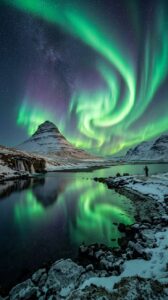
For many travelers, seeing the Northern Lights is the ultimate reason to explore Iceland’s Ring Road during the colder months.
The Aurora Borealis appears when charged particles from the sun interact with Earth’s atmosphere, creating colorful lights across the night sky. Green is the most common color, but strong displays can also include shades of pink, purple, and white.
Because Iceland has relatively low light pollution outside major towns, travelers have many opportunities to search for the lights during clear nights. However, the Northern Lights are a natural phenomenon, so sightings can never be guaranteed.
Black-Sand Beaches and Volcanic Landscapes
Iceland’s volcanic history is visible throughout Iceland’s Ring Road journey. One of the most impressive examples is Reynisfjara, a black-sand beach near the town of Vík.
The beach features dark volcanic sand, powerful waves, dramatic cliffs, and unusual rock formations rising from the sea. Its beauty is unforgettable, but visitors should stay well away from the water because powerful sneaker waves can be dangerous.
The volcanic landscapes surrounding the route make the road trip feel almost otherworldly. Lava fields, mountains, craters, and geothermal areas reveal the powerful geological forces that shaped Iceland.
Charming Towns and Local Experiences
Although nature is the main attraction, Iceland’s Ring Road also passes through several small towns and communities where travelers can experience Icelandic culture.
Akureyri, often called the capital of North Iceland, is a popular stop with colorful houses, cafés, botanical gardens, and views of the surrounding mountains.
In smaller communities, travelers can enjoy local restaurants, Icelandic seafood, traditional dishes, and cozy guesthouses. These stops provide a welcome break from long drives and allow visitors to experience a quieter side of Iceland.
Hot Springs and Geothermal Wonders
Another highlight of Iceland’s Ring Road is the opportunity to experience Iceland’s geothermal activity. The country sits on a region where tectonic plates meet, creating an environment rich in volcanic and geothermal activity.
Natural hot springs and geothermal pools can be found throughout the country. Relaxing in warm geothermal water while surrounded by mountains is one of the most memorable experiences a traveler can have.
The famous Blue Lagoon is located near Reykjavík rather than directly on the Ring Road, but it can easily be added to a wider Iceland itinerary.
Best Time for an Iceland’s Ring Road Road Trip
Choosing the right season is important when planning an Iceland’s Ring Road adventure.
Summer offers long daylight hours, making it easier to drive and explore. From June to August, travelers can enjoy green landscapes, hiking trails, and nearly endless daylight.
Winter offers a completely different experience. Snow-covered landscapes create a magical atmosphere, and the long dark nights increase opportunities to see the Northern Lights. However, winter driving conditions can be challenging, so travelers should carefully monitor weather and road conditions.
Spring and autumn offer fewer crowds and changing landscapes, but travelers should also expect unpredictable weather.
Tips for the Journey
A successful Iceland’s Ring Road trip requires some preparation. Always check weather and road conditions before driving, especially during winter.
Plan your fuel stops because some sections of the route have long distances between towns. Booking accommodation in advance is also recommended during the busy summer season.
Most importantly, avoid rushing. Iceland’s scenery is best experienced slowly. Leave enough time to stop at viewpoints, take photographs, explore trails, and enjoy unexpected discoveries along the way.
Conclusion
An Iceland’s Ring Road road trip is more than simply driving around an island. It is a journey through waterfalls, glaciers, volcanoes, black-sand beaches, peaceful towns, geothermal landscapes, and spectacular skies.
From the colorful streets of Reykjavík to the icy beauty of Jökulsárlón and the magical possibility of seeing the Northern Lights, every part of the route offers something memorable.
For travelers searching for adventure, natural beauty, and a road trip unlike any other, Iceland’s Ring Road provides the perfect combination. With careful planning and a sense of adventure, the journey can become one of the most unforgettable travel experiences of a lifetime.